


Chlorine-Dioxide Kimya LK+A
Safe Chlorine-Dioxide handling
A more stable and compact approach than traditional processes, ensuring superior disinfection performance and lower corrosivity.
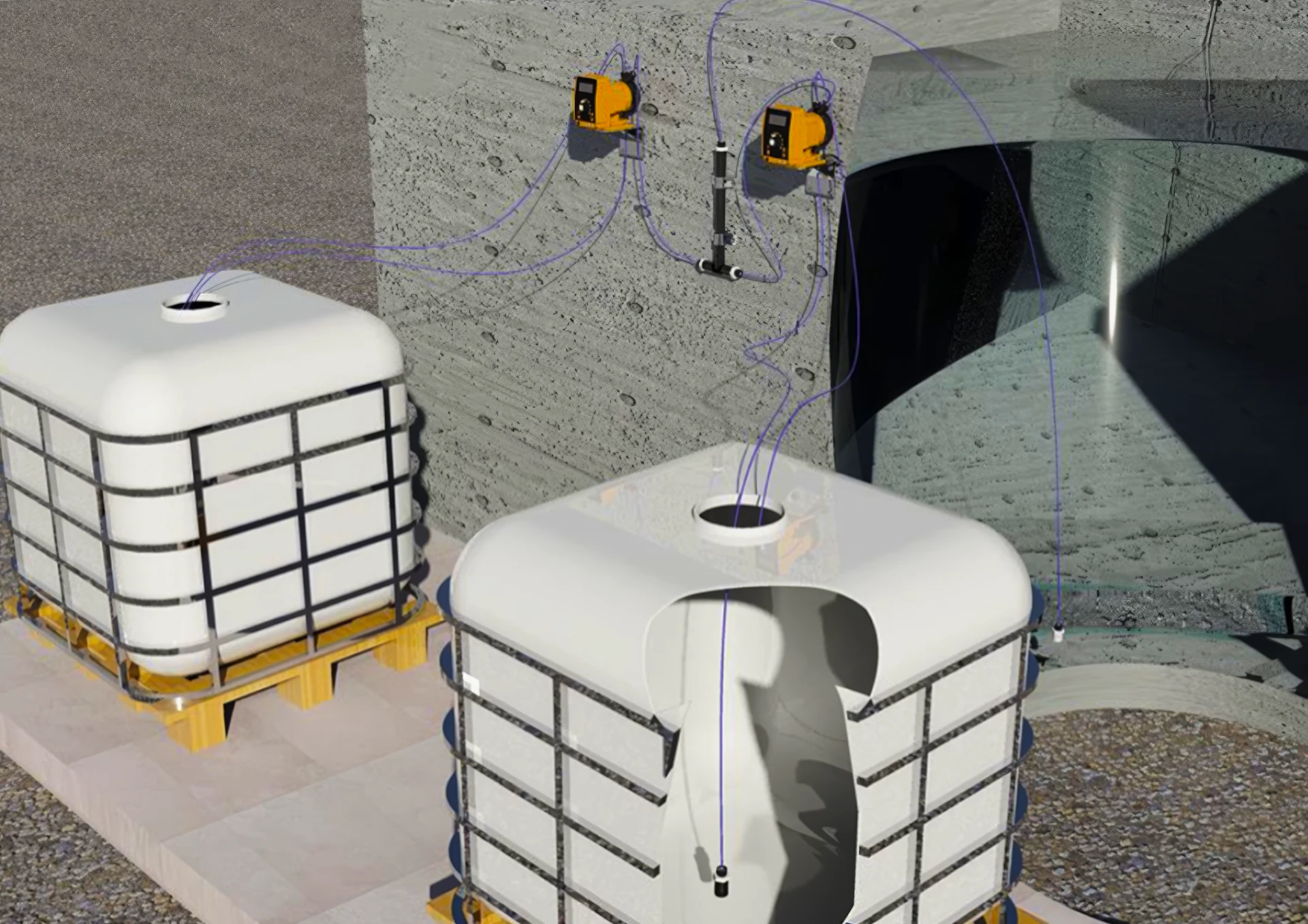
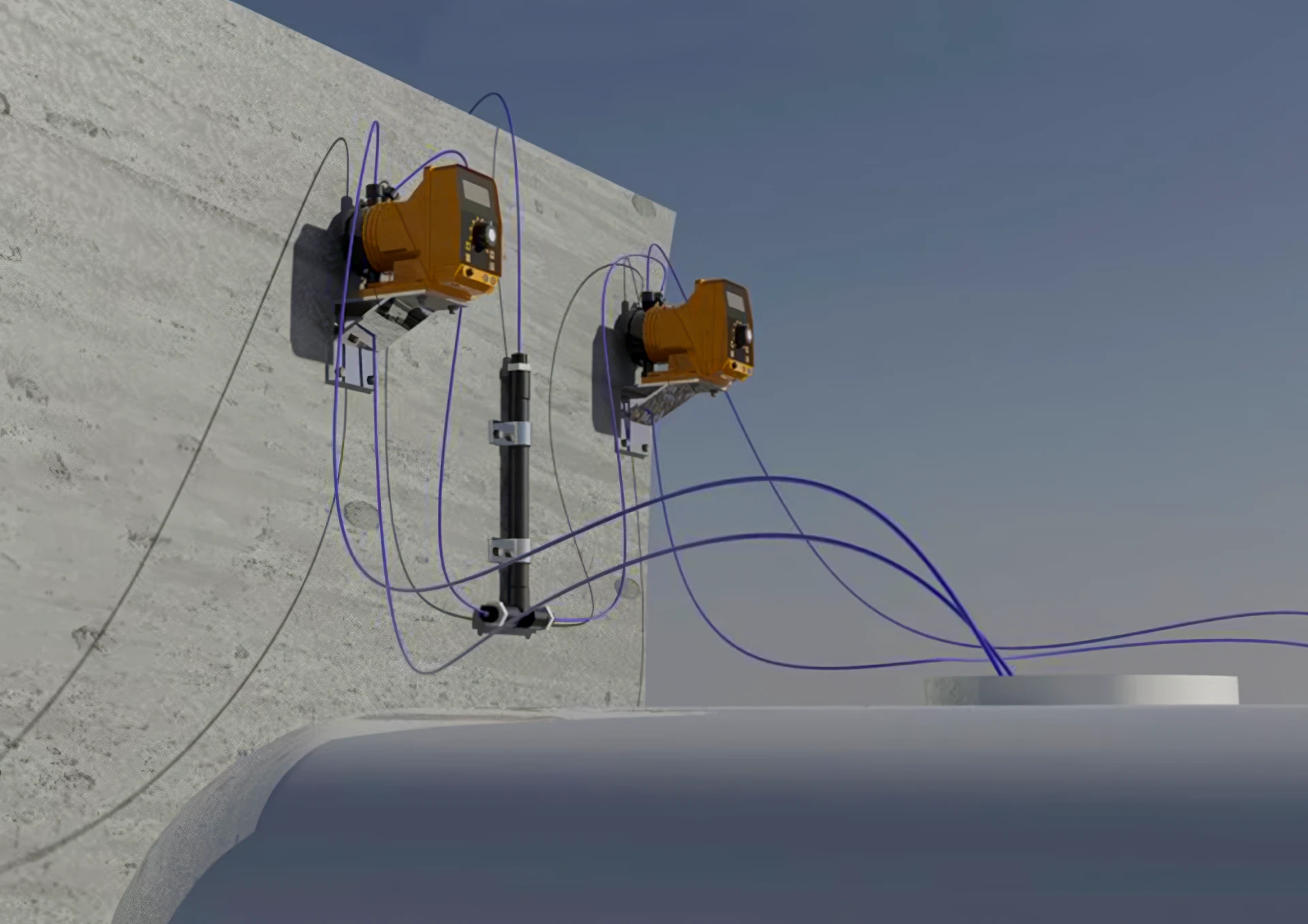
The traditional process for Chlorine Dioxide production is inherently unstable, generating highly exothermic and potentially explosive reactions. Conventional in situ systems require complex and sensitive equipment to be installed close to the dosing point, resulting in high operational and maintenance costs.
KIMYA has developed LK+A, a two-component formulation that introduces a controlled, slow-reaction kinetic mechanism. The result is a safer and more controlled process, achievable with extremely compact and cost-effective equipment, while maintaining superior efficacy against microorganisms, viruses, spores, fungi, and algae, along with low corrosivity and reduced formation of by-products (e.g. THMs).
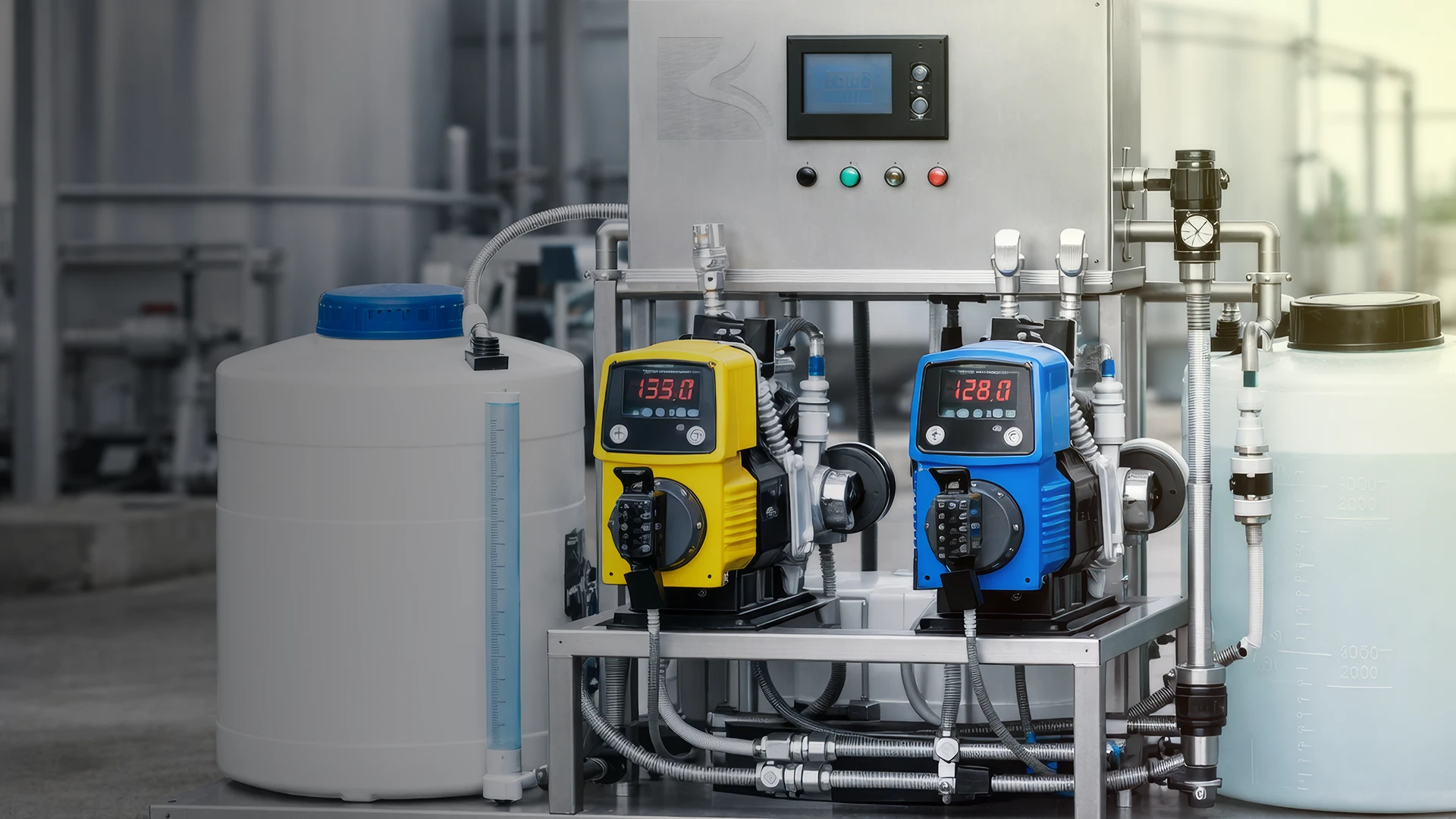
KIMYA LK+A in operation
A closer look at the KIMYA LK+A system, designed to ensure operational reliability, precise control, and consistent quality in Chlorine Dioxide generation – overcoming the limitations of conventional processes.
Key Benefits of LK+A
A safer, simpler, and more cost-effective system for producing Chlorine-Dioxide in situ, with minimal operational impact and maximum disinfection performance.
Comparative Overview
| Parameter | Kimya LK+A | Hypochlorite / Glutaraldehyde / Peracetic Acid |
|---|---|---|
| Handling Safety | High (no risk of explosive reactions) | Handling subject to strict safety protocols |
| Spectrum of Activity | Broad (viruses, spores, fungi, algae) | Varies depending on the compound |
| Biofilm Control | Eliminates biofilm and prevents regrowth | Limited control of biofilm regrowth |
| Corrosivity | Low (non-hydrolyzing) | Higher (hydrolysis and chlorinated compounds) |
| Efficiency at Low Dosage | High (oxidizing power ≈ 2,5× chlorine) | Lower efficiency at equivalent dosage |
| pH Range | Effective up to pH 12 | Performance highly dependent on pH |
