


Role of Inhibitors in the Pickling Process
Pickling inhibitors are used to prevent over-pickling of steel in acid baths, particularly during line stoppages, when prolonged contact with the solution can lead to material loss, excessive acid consumption and surface staining. Acting as a selective barrier, they modulate the acid–metal reactivity and enable controlled oxide removal, maintaining process stability even under the most critical conditions.
Hidden risks in conventional inhibitors
The vast majority of inhibitors available on the market are based on formaldehyde-releasing agents, such as Methenamine (Hexamethylenetetramine). These substances are not hazardous as such in their original packaging. However, when dosed into pickling baths, they generate Formaldehyde, a carcinogenic substance that is released into the environment and workplace areas.
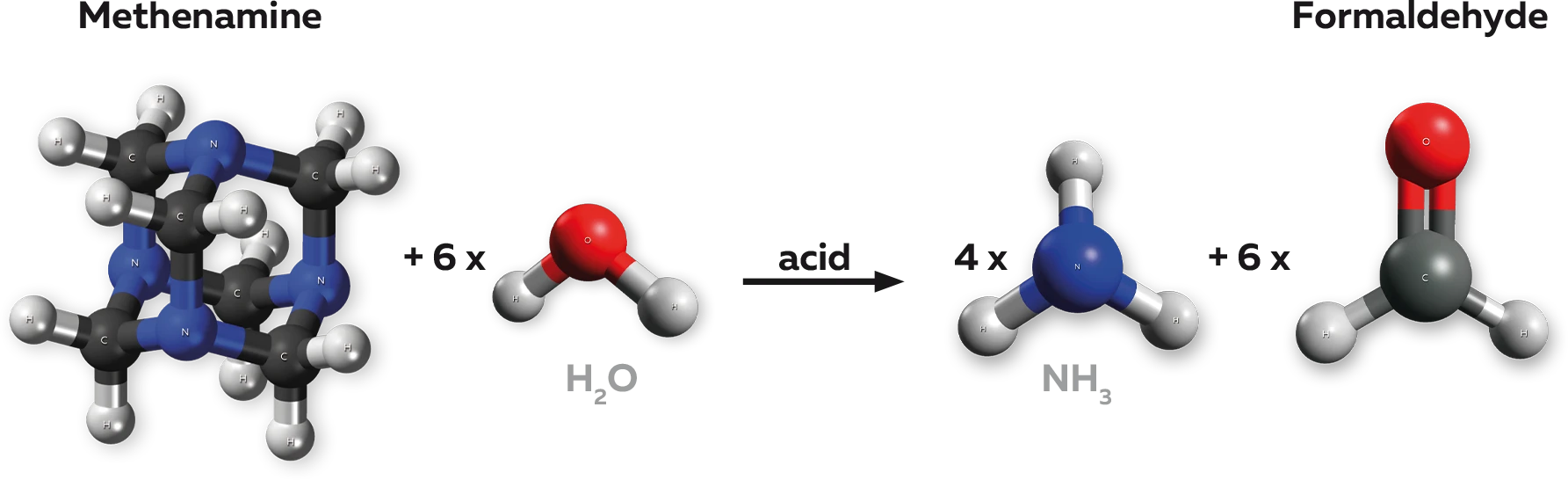
In most cases, Production and HSE departments are not aware of the risks associated with the use of these products, as the Safety Data Sheet only reports the hazard pictograms and risk phrases related to the product as supplied. The risks arising from its specific applications are not mentioned.
However, the presence of formaldehyde can be easily detected through targeted analysis of stack emissions or rinse water.
Other common critical substances
Beyond Formaldehyde-releasing agents, other highly hazardous substances are commonly used in the formulation of Pickling Inhibitors:
| Substance | Risk | Hazard Identification |
|---|---|---|
| O‑Toluidine | Carcinogenic |  |
| Thiourea | Carcinogenic |  |
| 2‑Butin‑1,4‑diol | Very Toxic | 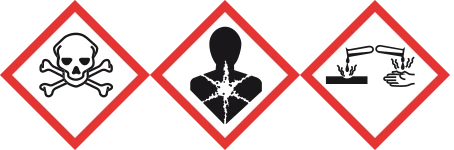 |
| Propargyl Alcohol | Very Toxic |  |
Kimya technology
Kimya formulations for pickling combine selective inhibition with the absence of formaldehyde releasers, highly toxic and carcinogenic substances, ensuring full HSE compliance and operator safety. Targeted adsorption on the base metal protects the strip during slowdowns and line stoppages, resulting in reduced weight loss, uniform surface finish and a measurable reduction in acid consumption and copper deposition. Formulations are tailored to the bath chemistry and the grades of steel being processed.
